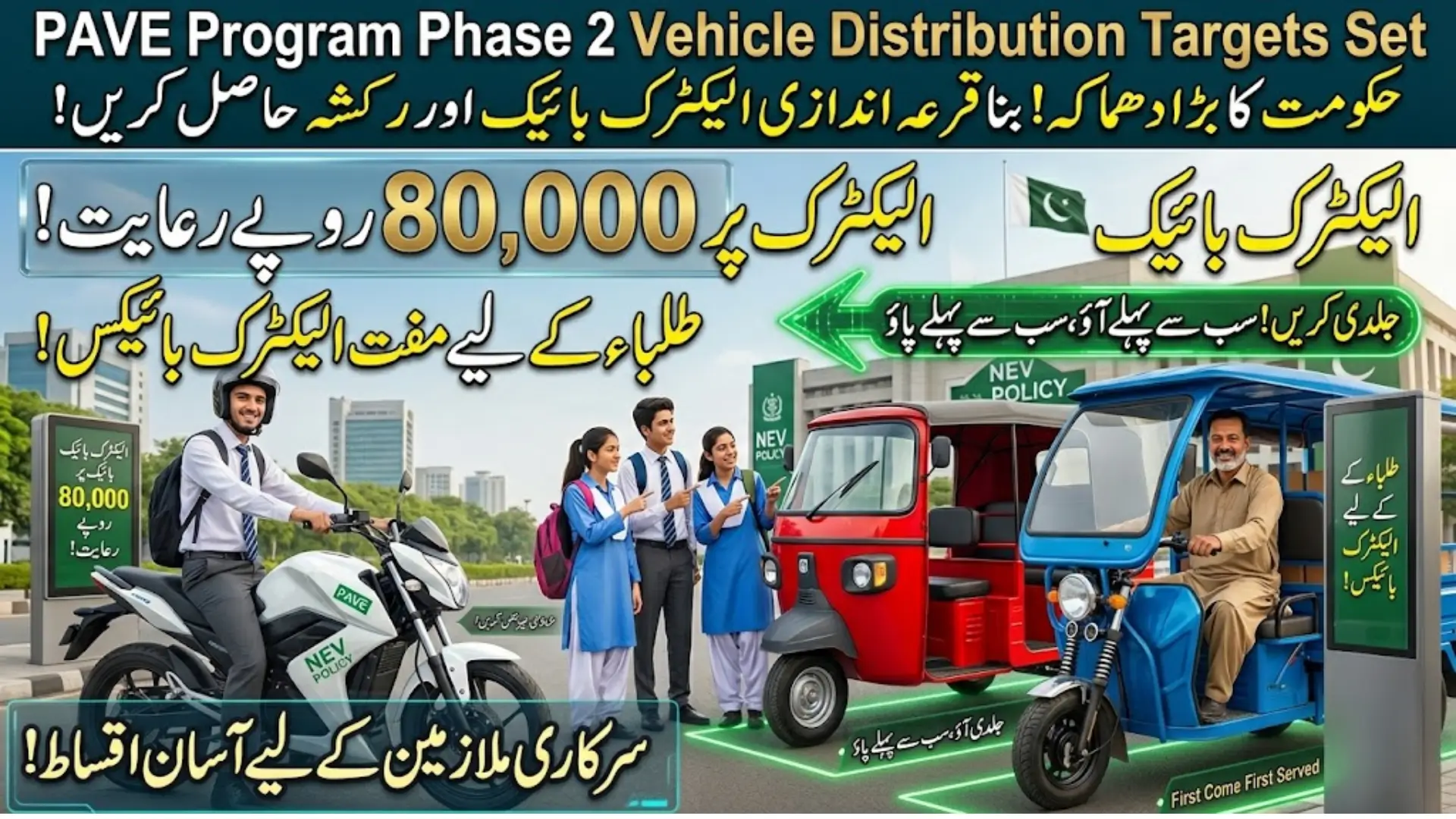
PAVE Program Phase 2 Vehicle Distribution Targets
The federal government has officially approved the second phase of the Pakistan Accelerated Vehicle Electrification (PAVE) Program under the New Energy Vehicles (NEV) Policy 2025–30. This phase focuses on distributing electric bikes, rickshaws, and loaders across Pakistan with a strong push toward cleaner and cheaper transport options. The program is designed to support citizens through subsidies and easier access to electric vehicles.
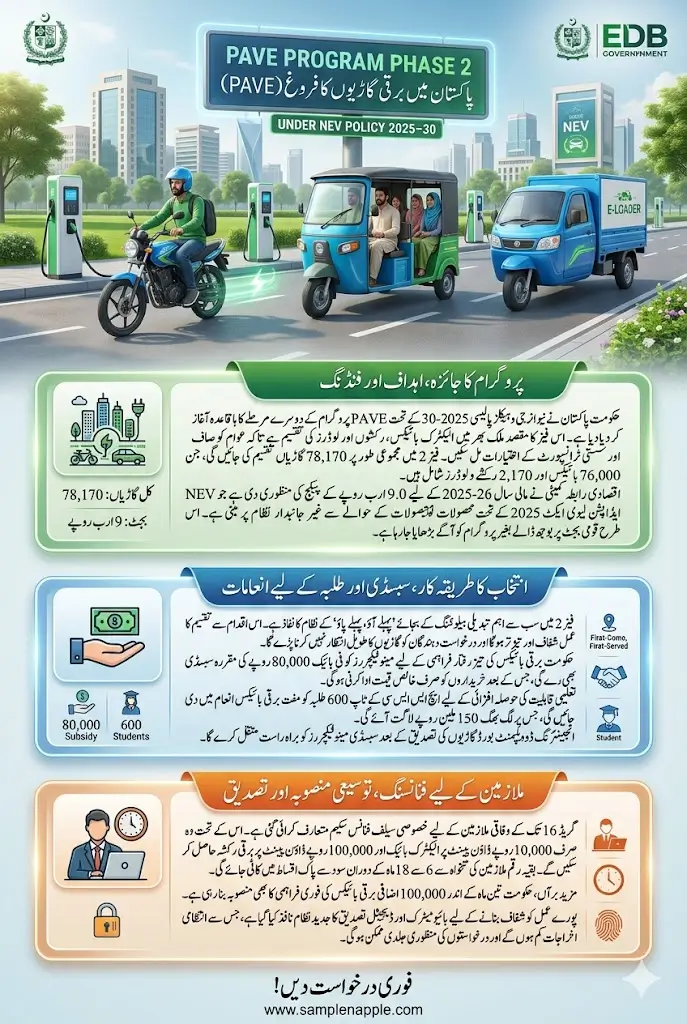
According to official sources, the distribution in PAVE Program Phase 2 Vehicle Distribution Targets Set Under NEV Policy 2025–30 will follow a First-Come, First-Served system instead of balloting. This change aims to reduce delays and make the process faster and more transparent for applicants waiting for electric vehicles.
You Can Also Read: BOP Offers 0% Markup Installment Plans on Honda and E-Turbo Bikes
Government Funding for Phase 2
The Economic Coordination Committee (ECC) has approved a Rs. 9.0 billion package for the financial year 2025–26 to support this initiative. The funding is part of a revenue-neutral system under the NEV Adoption Levy Act 2025, which ensures the program is financially balanced without placing extra burden on the national budget.
Vehicle Distribution Targets Under Phase 2
The PAVE Program Phase 2 Vehicle Distribution Targets Set Under NEV Policy 2025–30 includes a large-scale rollout of electric vehicles across different categories. The goal is to reduce fuel consumption and promote eco-friendly transportation in Pakistan.
| Category | Target Units |
|---|---|
| Electric Bikes | 76,000 |
| Rickshaws & Loaders | 2,170 |
| Total Phase 2 Target | 78,170 Vehicles |
This phase follows the successful completion of a pilot phase where 41,000 vehicles were already distributed.
You Can Also Read: Maryam Nawaz Launches AI Monitoring System for Suthra Punjab
Fast-Track Expansion Plan for Electric Bikes
The government is also planning a fast-track rollout of an additional 100,000 electric bikes within three months. These vehicles will be supported through locally available and imported CKD kits. A fixed subsidy of Rs. 80,000 per electric bike will be provided directly to manufacturers, ensuring smooth production and delivery.
Officials believe this expansion will significantly reduce fuel consumption and support the shift toward electric mobility in the country.
Student Electric Bike Distribution Program
As part of the initiative, 600 electric bikes will be given free to top-performing students of the 2025 Higher Secondary School Certificate (HSSC) exams. These students belong to different education boards across Pakistan.
The total cost of this special reward program is estimated at around Rs. 150 million. It aims to encourage academic excellence while promoting clean energy transport.
You Can Also Read: After Ramadan, Maryam Confirms Ongoing Rs. 10000 Financial Aid
New First-Come, First-Served System Introduced
One of the biggest changes in PAVE Program Phase 2 Vehicle Distribution Targets Set Under NEV Policy 2025–30 is the replacement of the old balloting system. Now, applicants will be selected based on their application time.
This means earlier applicants will get priority, making the process more fair and efficient. The system also helps reduce confusion and long waiting times seen in Phase 1.
Improved Payment and Subsidy System
Under the new structure, buyers will only pay the net price after subsidy deduction. The Engineering Development Board (EDB) will directly transfer subsidies to manufacturers after verifying delivery and registration.
This change is expected to make payments smoother and reduce delays in vehicle delivery.
You Can Also Read: Imam Masjid Wazifa Check Online Status 25,000
Special Financing for Government Employees
A new self-finance scheme has also been introduced for federal employees in BS-16 and below. Under this plan, employees can get electric bikes with a down payment of Rs. 10,000 and rickshaws with Rs. 100,000.
The remaining amount will be recovered through interest-free payroll deductions over 6 to 18 months, making it easier for low-income workers to afford electric transport.
Risk-Based Verification System Introduced
Instead of costly full-scale verification, the government has introduced a risk-based system. This will use biometric checks, photos, and digital records for validation.
Officials say this step will reduce administrative costs and speed up the approval process for applicants.
You Can Also Read: How to Apply for Wazir-e-Azam Apna Ghar Program 2026
FAQs
What is the PAVE Program Phase 2?
It is a government initiative under NEV Policy 2025–30 to distribute electric bikes, rickshaws, and loaders across Pakistan. The goal is to promote clean and affordable transport.
How many vehicles will be distributed in Phase 2?
A total of 78,170 vehicles will be distributed, including 76,000 electric bikes and 2,170 rickshaws and loaders.
What is the selection method in Phase 2?
The government has replaced balloting with a First-Come, First-Served system. Early applicants will get priority in vehicle distribution.
Is there any subsidy on electric bikes?
Yes, a fixed subsidy of Rs. 80,000 per electric bike will be given directly to manufacturers, reducing the final cost for buyers.
Are students included in this program?
Yes, 600 electric bikes will be given free to top-performing HSSC students as a reward for academic excellence.
Conclusion
Overall, the PAVE Program Phase 2 under the NEV Policy 2025–30 is a major step by the government to promote electric mobility in Pakistan. With clear vehicle distribution targets, direct subsidies, and a First-Come, First-Served system, the program aims to make transport cleaner, cheaper, and more accessible for citizens.
This initiative not only supports environmental protection but also provides financial relief through subsidies and easy financing options. From students to government employees, different groups are being included, making this phase a more practical and inclusive step toward a sustainable transportation future.