Pakistan Launches Phase 2 of PAVE Program
The Pakistan government has launched Phase 2 of the PAVE program as part of a larger national effort to promote electric vehicles and help people struggling to find jobs. Under this new phase, the government will distribute electric bikes, loaders and rickshaws to eligible individuals on a first-come, first-served basis.
The initiative is designed to reduce fuel costs and pollution across the country, as well as create income opportunities. The program is part of the New Energy Vehicles (NEV) Policy 2025-30 and has the full support of the federal government.
With billions of rupees allocated and plans to distribute thousands of vehicles, the scheme is expected to benefit the unemployed, students and low-income groups.
You Can Also Read: After Ramadan, Maryam Confirms Ongoing Rs. 10000 Financial Aid
What is the PAVE Program Phase 2?
The Pakistan Accelerated Vehicle Electrification (PAVE) Program is a government initiative aimed at promoting electric vehicles across the country. In Phase 2, the focus is on expanding access and improving the distribution process so more people can benefit.
Unlike the first phase, which used a balloting system, this new phase follows a first-come, first-served method. This means applicants who apply early and meet the criteria will have a better chance of receiving electric bikes or rickshaws.
The main goal is to help unemployed individuals start earning through ride-hailing, delivery services, or small transport businesses.
Budget and Government Approval
The government has approved a total budget of Rs. 9 billion for the fiscal year 2025–26. This decision was taken by the Economic Coordination Committee, showing strong support for the program.
The scheme is funded through the NEV Adoption Levy Act 2026, which ensures that the program does not put extra burden on the national budget. This revenue-neutral model makes the initiative sustainable for the long term.
You Can Also Read: How to Apply for Wazir-e-Azam Apna Ghar Program 2026
Target Vehicles and Distribution Plan
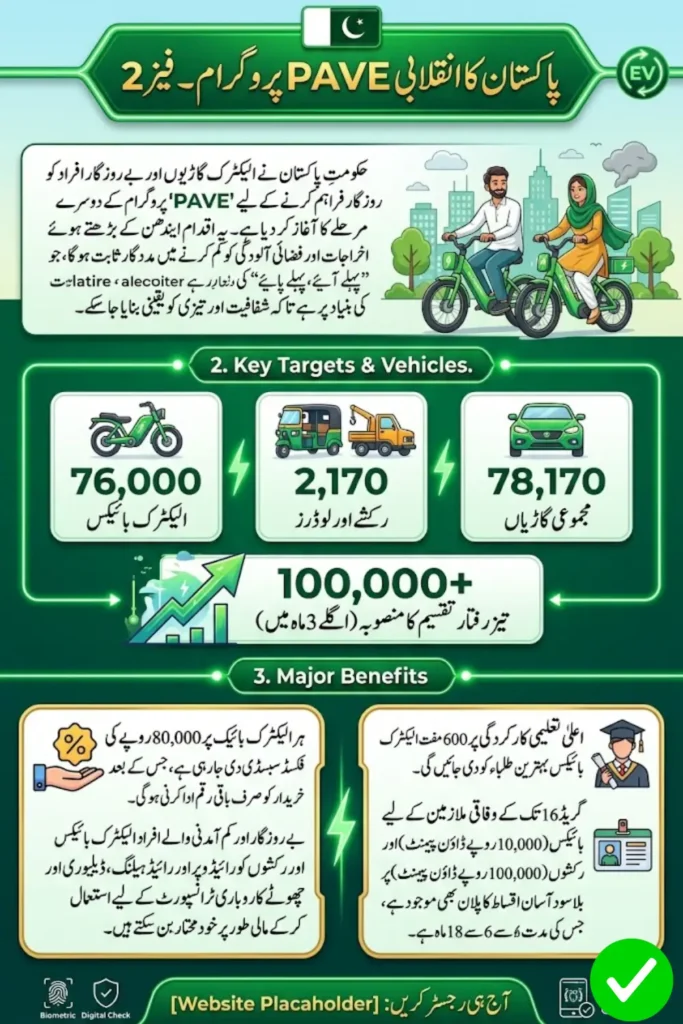
The government has set clear targets for vehicle distribution in this phase. The aim is to provide electric vehicles to thousands of people across Pakistan.
| Category | Number of Vehicles |
|---|---|
| Electric Bikes | 76,000 |
| Rickshaws & Loaders | 2,170 |
| Total Vehicles | 78,170 |
In addition, there is a plan to fast-track another 100,000 electric bikes within three months, which will further expand the program.
Subsidy and Pricing Model
One of the most attractive parts of the program is the subsidy offered by the government. Each electric bike will receive a fixed subsidy of Rs. 80,000.
Instead of paying the full amount upfront, buyers will only pay the remaining price after the subsidy is deducted. The subsidy amount will be directly transferred to manufacturers through the State Bank of Pakistan after verification.
This system makes the process easier, transparent, and more affordable for users.
You Can Also Read: FIA Extends Job Application Deadline to May 11, 2026
Special Benefits for Jobless Individuals
A key highlight of Pakistan Launches Phase 2 of PAVE Program is its focus on jobless and low-income individuals. Electric bikes and rickshaws can be used for:
- Ride-hailing services
- Delivery jobs
- Small business transport
- Daily commuting
By providing affordable vehicles, the government is helping people earn a stable income and become financially independent.
Free Bikes for Top Students
In addition to supporting jobless individuals, the government is also encouraging education. Around 600 free electric bikes will be given to top-performing students from all education boards in Pakistan.
These bikes will be awarded to students who secure top positions in the 2025 HSSC exams. This initiative not only rewards academic excellence but also helps students with transportation.
Easy Installment Plan for Government Employees
The program also includes a self-finance scheme for federal employees in BS-16 and below. This makes it easier for them to own electric vehicles.
| Detail | Information |
|---|---|
| Down Payment for Bikes | Rs. 10,000 |
| Down Payment for Rickshaws | Rs. 100,000 |
| Remaining Payment Method | Paid in Easy Monthly Installments |
| Interest Charges | No Interest (0% Markup) |
| Payment Duration | 6 to 18 Months |
This flexible payment plan ensures affordability for salaried individuals.
Improved Application and Verification System
To reduce delays and improve efficiency, the government has introduced a new verification system. The previous 100% third-party verification method has been replaced with a smarter approach.
The new system includes:
- Biometric verification
- Photo evidence
- Digital checks through an online portal
This change will reduce costs and speed up the approval process.
You Can Also Read: 8171 CNIC Check Online 13500 May Payment Eligible
Role of Financial Institutions and Partnerships
The program is not limited to government support only. It also involves banks, financial institutions, and private companies.
Key participants include:
- Banks providing financing options
- Non-Banking Financial Companies (NBFCs)
- Private sector partnerships
- Overseas Pakistanis with NICOP/POC
- Fleet operators
These partnerships will help expand access and make the program more effective.
Fuel Savings and Economic Impact
One of the biggest advantages of this program is fuel savings. Officials estimate that the use of electric vehicles will reduce petrol consumption significantly.
- Short-term savings: 8.6 million litres of petrol
- Estimated value: USD 8 million
- Long-term savings (5 years): USD 222 million
This will not only reduce fuel imports but also help stabilize the economy.
Strong Response in Phase 1
The first phase of the PAVE Program received a huge response from the public. More than 269,000 applications were submitted.
Although there were some delays due to banking approvals, the self-finance scheme achieved a 99.6% success rate in delivery. This shows strong demand and trust in the program.
Operational Setup and Management
To ensure smooth implementation, the Engineering Development Board (EDB) will manage the program. A dedicated team of 14 members will be formed.
- Annual team cost: Rs. 32.76 million
- Operational expenses: Rs. 37 million
This structured approach will help monitor the program effectively and avoid delays.
FAQs
Who can apply for the PAVE Program Phase 2?
Anyone meeting the eligibility criteria, including jobless individuals, students, and low-income groups, can apply through the official portal.
How are vehicles distributed in this phase?
Vehicles are given on a first-come, first-served basis instead of balloting, making the process faster and more transparent.
What is the subsidy amount for electric bikes?
The government provides a fixed subsidy of Rs. 80,000 per electric bike, reducing the overall cost.
Can government employees apply for this scheme?
Yes, employees in BS-16 and below can apply under an easy installment plan with low down payments.
How does this program help the economy?
It reduces fuel consumption, saves foreign exchange, creates jobs, and promotes clean energy usage.
You Can Also Read: BISP 8171 May 2026 Stipend Schedule Announced
Final Words
Pakistan Launches Phase 2 of PAVE Program as a practical step to support jobless individuals and promote affordable transportation across the country.
By offering electric bikes and rickshaws with subsidies and easy payment options, the government is helping people earn a stable income while also reducing their daily fuel expenses.
At the same time, this initiative supports Pakistan’s shift toward clean energy and economic stability. With better planning, faster distribution, and strong public interest, this program can play an important role in improving livelihoods and building a more sustainable future.