
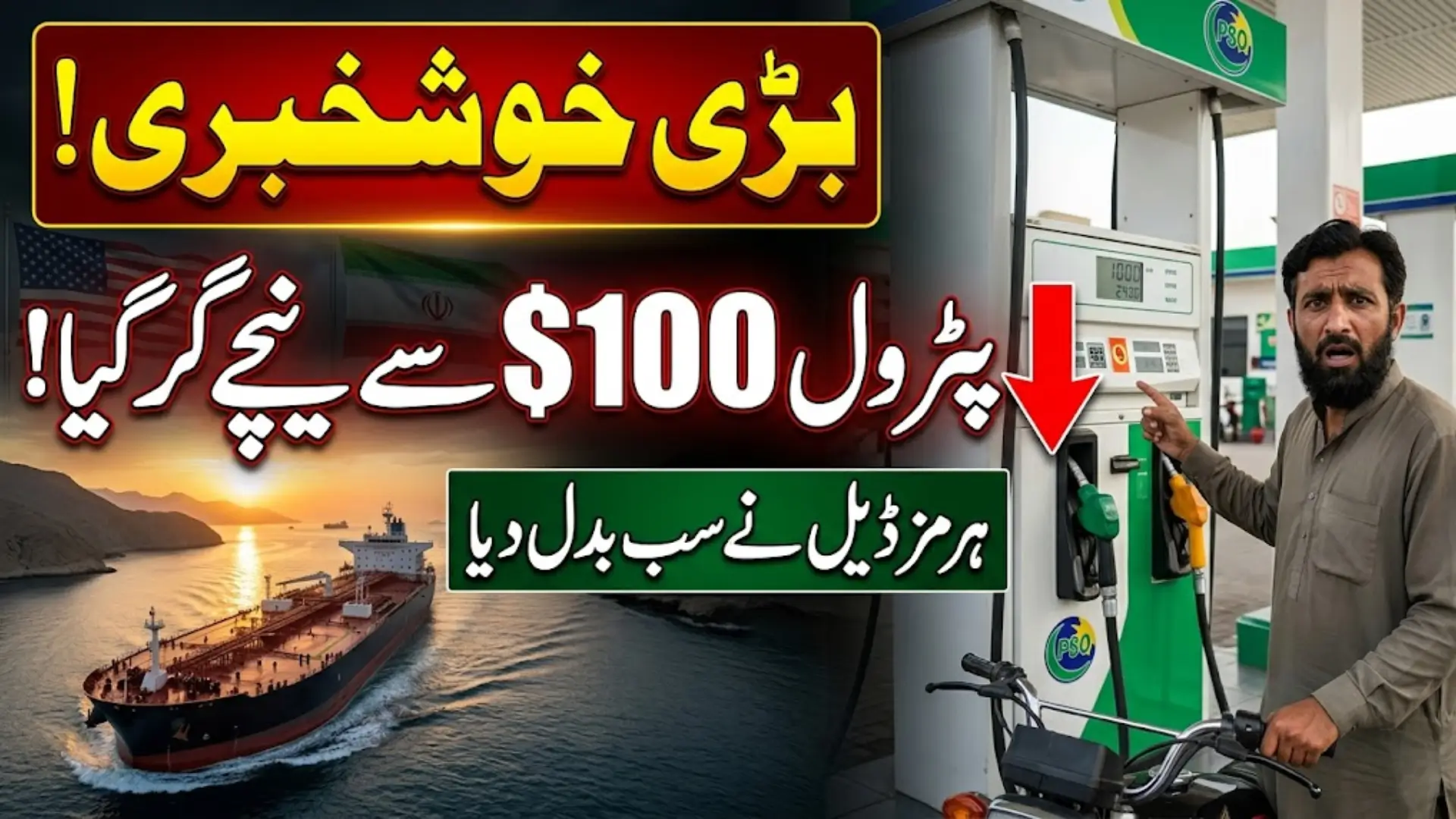
Oil Prices Drop Below $100
Everyone expected oil prices to stay high. Then Monday morning changed everything. In early Asian trading today, Brent crude crashed more than 5 percent, falling below the $100 mark to $98.27 per barrel. West Texas Intermediate followed, sliding to $91.63. The reason? Reports that a deal to reopen the Strait of Hormuz is now very close to being finalized.
For Pakistan, a country that imports oil and LNG through the same waters that have been blocked for months, this is not just international news. This hits close to home. Very close.
Quick Answer
Oil prices fell sharply on Monday after reports emerged that a US-Iran deal to reopen the Strait of Hormuz is nearly complete. Brent crude dropped over 5 percent to $98.27 and WTI fell to $91.63. The deal would include a 60-day ceasefire, restoration of maritime traffic, and continued nuclear talks between the two sides.
Also Read: KPK Announces Summer Vacations 2026 for Public and Private Schools — Full Schedule Inside
Key Detail
| Detail | Information |
|---|---|
| Brent Crude Price (Monday) | $98.27 per barrel (down 5%+) |
| WTI Price (Monday) | $91.63 per barrel |
| Cause of Drop | Reports of Hormuz deal nearing completion |
| Deal Phase 1 | 60-day ceasefire + maritime traffic restored |
| Iran’s Timeline Estimate | Traffic back to normal within 30 days |
| Pakistan’s Concern | LNG imports, fuel costs, inflation |
| Trump’s Position | “Not rushing” but progress confirmed |
| Nuclear Talks | Still ongoing, not finalized yet |
What Is Actually Happening With the Strait of Hormuz Deal
The Strait of Hormuz is a narrow waterway between Iran and Oman. Roughly 20 percent of the world’s oil and liquefied natural gas passes through it every single day. Since the conflict began, shipping traffic through this route has been severely disrupted, pushing Brent crude as high as $144 per barrel earlier this year according to the IEA.
The proposed agreement includes three main elements:
- A 60-day ceasefire extension between the US and Iran
- Restoration of maritime traffic through the Strait of Hormuz
- Continued nuclear negotiations requiring Iran to scale back its enriched uranium program
Iran’s Tasnim news agency reported that vessel traffic through the Strait could return to pre-war levels within 30 days if the agreement is signed. That is a significant claim. But here is the thing. It is not done yet.
Also Read: Eid ul Adha 2026 Holidays in Pakistan: Official 3-Day Holiday From May 26 to 28 Confirmed
Trump Says “Do Not Rush” — So What Is the Hold-Up?
Over the weekend, US President Donald Trump posted on social media that he had instructed his negotiators “not to rush into a deal.” That single post was enough to inject uncertainty back into markets. A senior US official later clarified that progress had been made, but no agreement would be signed on Sunday. So markets are now sitting in an uncomfortable middle ground. Hopeful. But not certain.
On the Iranian side, Foreign Ministry spokesperson Esmail Baghaei confirmed the memorandum is in its final stages. However, he noted that nuclear-specific details are still not fully resolved.
And then there is Israeli Prime Minister Benjamin Netanyahu, who complicated things further by stating that any final agreement with Iran must completely eliminate the nuclear threat. The deal framework also reportedly includes a ceasefire between Israel and Hezbollah, which Netanyahu is not fully on board with.
So yes, progress is real. But obstacles remain.
Why Pakistan Should Be Watching This Very Carefully
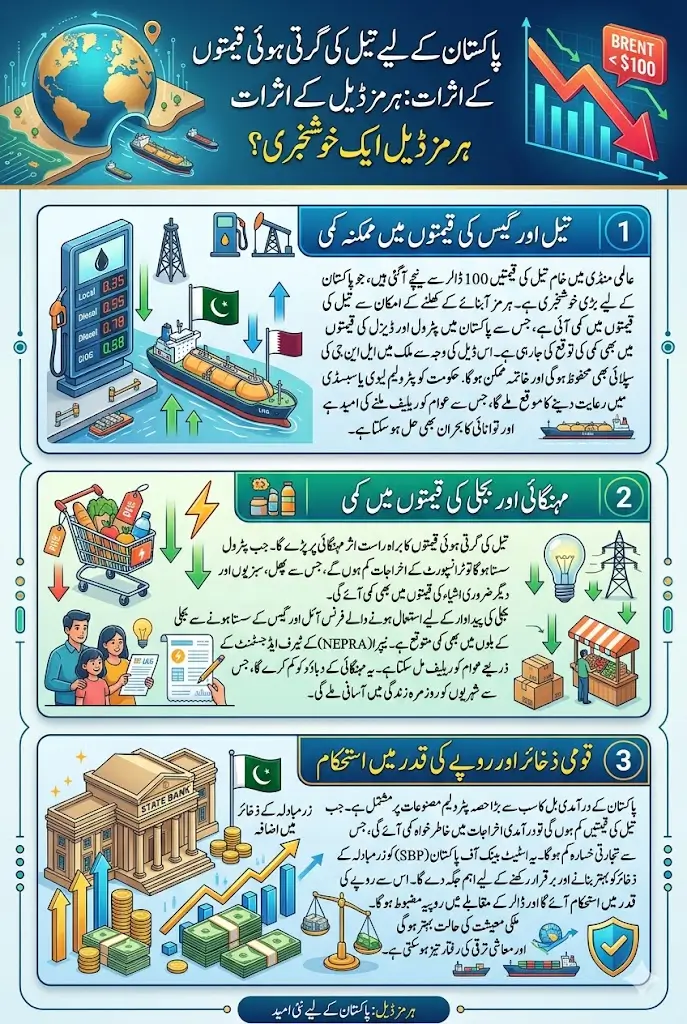
Pakistan’s energy situation has been under serious strain since the Hormuz crisis began. Here is the direct impact chain:
LNG Supply Disruption Pakistan imports a significant portion of its liquefied natural gas through shipping routes that pass near or through the Strait of Hormuz. When the Strait closed, LNG tankers faced severe delays or rerouting. A Qatari LNG tanker only recently managed to reach Pakistan after crossing the Strait, which tells you how tight supply has been.
Fuel Prices in Pakistan The State Bank of Pakistan (SBP) and the petroleum pricing committee set fuel prices partly based on international crude benchmarks. When Brent crude was near $140, the pressure on domestic fuel prices was enormous. A sustained drop below $100 gives the government room to either reduce prices or reduce the subsidy burden.
Inflation and Electricity Costs Pakistan’s electricity generation is partly dependent on furnace oil and gas. Higher oil prices feed directly into electricity generation costs, which then hit household bills. If Brent stays below $100 and moves lower, the NEPRA-determined electricity tariff adjustments could eventually reflect this.
Trade and Foreign Reserves Pakistan’s import bill for petroleum products is one of the largest drains on its foreign exchange reserves. Any sustained reduction in oil prices directly benefits the trade deficit and gives the SBP more breathing room on the rupee and reserve management front.
Honestly speaking, a deal that reopens Hormuz could not have come at a better time for Pakistan’s economy.
Also Read: E Learn She Earn Program 2026: Eligibility, Step-by-Step Registration, Documents and Benefits
What Happens if the Deal Falls Through?
This is the scenario nobody wants to think about. But it is worth considering. If negotiations collapse, oil prices could spike back toward $120 or higher almost immediately. The IEA has already warned that global oil markets could enter a critical shortage zone by July 2026 as summer demand rises and inventories keep falling.
Pakistan, with limited storage capacity and high import dependency, would feel that pain quickly. Fuel prices would climb. Electricity costs would follow. And inflation, which has only recently started showing signs of cooling, would face fresh upward pressure.
The uncertainty is real. Even if a deal is signed, questions remain about how fast damaged infrastructure in the region can actually be repaired, and whether long-term security in the Strait can genuinely be guaranteed.
What Experts Are Saying
The International Energy Agency (IEA) has been direct in its assessment. IEA Executive Director Fatih Birol stated recently that the most important solution to the ongoing energy shock would be the “full and unconditional reopening” of the Strait of Hormuz. He also warned that developing nations in Asia and Africa, including Pakistan, will feel the biggest pain if the crisis drags on.
Energy analysts at MUFG noted in a recent report that full normalization of Middle East oil supply may not happen until 2027 due to the scale of infrastructure damage caused by the conflict. That is a sobering number for anyone hoping for an immediate price relief.
What Should Pakistan Expect in the Coming Days?
A few things to watch closely:
- If the deal is signed this week, expect Brent crude to potentially fall further, possibly toward $90 or below as markets price in restored supply.
- If talks stall again, prices will bounce back up sharply. Markets are very sensitive to any negative signal right now.
- Pakistan’s OGRA and petroleum ministry will be monitoring international prices closely. A significant and sustained drop could trigger a fuel price revision within the next review cycle.
- LNG tanker movements toward Karachi Port will be one of the earliest real-world signs that the Strait is actually reopening for normal traffic.
The government in Islamabad has not made any public statement yet on the potential economic impact of the deal. But behind the scenes, you can be sure that the finance ministry and SBP are watching every update.
FAQs
1. Why did oil prices drop below $100 today?
Oil prices fell sharply on Monday after reports that a US-Iran deal to reopen the Strait of Hormuz is close to being finalized. Brent crude dropped over 5 percent to $98.27 per barrel, while WTI fell to $91.63. Markets reacted positively to the news of potential supply restoration through the Strait.
2. What is the Strait of Hormuz and why does it matter for Pakistan?
The Strait of Hormuz is a narrow waterway through which about 20 percent of the world’s oil and LNG passes daily. Pakistan imports LNG and crude oil through shipping routes connected to this passage. When the Strait was disrupted, Pakistan faced LNG supply delays and higher energy import costs.
3. Will fuel prices in Pakistan go down if the Hormuz deal is signed?
A sustained drop in international crude prices could give the government room to reduce petrol and diesel prices during the next OGRA review. However, the impact depends on how long lower prices hold and whether the rupee remains stable against the dollar at the time of the revision.
4. Is the US-Iran Hormuz deal confirmed or still in progress?
As of Monday, the deal is not yet signed. A senior US official confirmed progress has been made, but no agreement was finalized over the weekend. Iranian Foreign Ministry spokesperson Esmail Baghaei said the memorandum is in its final stages, with nuclear details still being worked out.
5. How long will it take for Hormuz to fully reopen after a deal?
Iran’s Tasnim news agency reported that vessel traffic through the Strait could return to pre-war levels within 30 days of an agreement being finalized. However, energy analysts have warned that full normalization of Middle East oil supply could take much longer due to infrastructure damage.
6. What does Trump’s “do not rush” comment mean for oil prices?
Trump’s social media post saying he instructed negotiators “not to rush” introduced uncertainty into markets, which is why oil prices did not fall even further on Monday. Markets are pricing in hope but also hedging against the possibility that talks could drag on or collapse entirely.
7. How does the Israel-Hezbollah ceasefire connect to this oil deal?
The proposed framework reportedly includes a ceasefire between Israel and Hezbollah as part of the broader agreement. Israeli Prime Minister Benjamin Netanyahu has stated that any final deal must eliminate Iran’s nuclear threat, which adds another layer of complexity to the negotiations beyond just the Hormuz reopening.
Also Read: Latest Update! BISP Survey Suspended Until June 15, 2026 Due to Benazir Mobile SIM Distribution
Final Words
The oil market moved fast on Monday morning. And for Pakistan, the direction it moved is the right one. A deal that reopens the Strait of Hormuz would bring genuine relief to an economy that has been absorbing one energy shock after another. Lower crude prices, restored LNG shipments, reduced pressure on foreign reserves. The pieces are all there.
But “almost a deal” is not the same as “a deal.” Watch this space carefully over the next 48 to 72 hours. What happens at the negotiating table this week could directly affect what you pay at the petrol pump next month.